
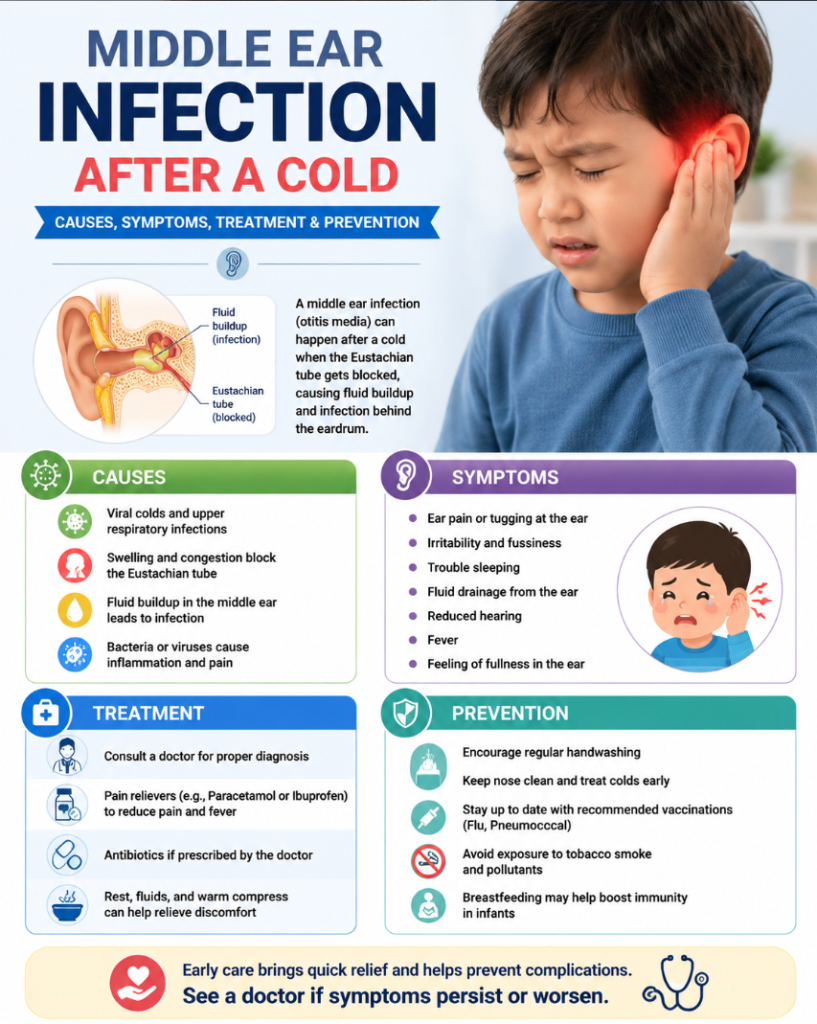



Generally common cold is diagnosed by the symptoms of runny nose, nasal congestion and sore throat. The symptoms of common cold usually resolve in 2 to 3 days. In some instances however ear ache or ear fullness might occur after the resolution of cold symptoms. These symptoms might indicate middle ear infection.
What is Otitis Media?
There are 3 parts in human ear structure; external ear, middle ear and inner ear. The Inflammation of this middle ear causing fluid build-up behind the eardrum is known as Otitis media or middle ear infection.
Why is Otitis Media a sequela of Common Cold?
Ear infections are frequent after colds for the following reasons. The middle ear is connected to nose and throat by an eustachian tube. This tube is the reason of ear pressure balance and drainage of the middle ear.
The Eustachian tubes run from the middle ear down to the back of the throat. During upper respiratory infection, the eustachian tube may get congested causing fluid build-up within the middle ear. The built-up fluid thus forms a suitable environment for the infection.As a result of swelling or blockage caused by inflammation and mucous accumulation, during the course of a cold the Eustachian tubes can become blocked and allow the pooling of fluids. Germs in these fluids are allowed to grow and hence cause an infection in the middle ear.
The factors which increase the risks are the following;
- Recurring colds and infections of the respiratory tract
- Allergies
- Smoking and exposure to smoking.
- Immunity compromised.
- Very young. Under the age of five especially.
Who is affected Mostly?
In younger children, Eustachian tubes are shorter and narrower and the angle is more horizontal. Adults also suffer from otitis media, but poor drainage through the narrow Eustachian tube in young children can lead to ear infections in children.
Signs of an Ear Infection After a Cold
Signs and symptoms to look out for as or after a cold has occurred:
- Pain or pressure in the ear
- Hearing impairment
- Fullness in the ear
- Fever
- Difficulty hearing, temporary hearing reduction.
- Pus or fluid discharge from the affected ear.
- Irritability and trouble sleeping in children
- Vertigo or imbalance
- Redness or swelling of the outer ear.
Not everyone will experience all the symptoms listed above. Consult your doctor if the signs and symptoms appear to be significant and/or long-lasting.
How to Prevent Ear Infections After a Common Cold
Here’s how to avoid ear infections after catching a common cold:
- Address cold symptoms quickly.
- Controlling cold symptoms can minimize ear inflammation and blockage. The key advice includes: ample rest, drinking sufficient fluids, using saline nasal sprays and staying hydrated.
- Keep nasal passages clear.
- Decreasing nasal blockage can help optimize Eustachian tube function and stop fluid from accumulating.
- Key methods:
- Saline nasal washes,
- steam inhalation with warm water, using a humidifier to retain moisture in your house.
- Wash your hands frequently.
- Most ear infections originate from viral respiratory illness.
- Regularly washing your hands can help reduce the number of colds transmitted.
- Always remember to:
- wash hands often,
- use alcohol-based hand sanitizers,
- don’t touch your face with unwashed hands.
- Stay away from cigarette smoke.
- Tobacco smoke irritates your airways and increases ear infection risk.
- You can improve ear health by
- avoiding smoking indoors,
- keeping children clear of secondhand smoke,
- making your house a non-smoking zone.
- Support your immune system.
- A strong immune system helps you fight illnesses more effectively.
- The best ways to enhance your immunity are
- by eating a variety of fruits and vegetables,
- engaging in frequent exercise,
- getting 7-9 hours of sleep per night, and
- reducing your stress levels.
- Control allergies.
- Allergic reactions can lead to nasal blockage and Eustachian tube obstruction.
- If you suffer from allergies:
- recognize and avoid allergens,
- take medical advice,
- make your indoor environment free of dust.
- Ensure up-to-date immunizations.
- Some immunizations have been shown to lower the incidence of ear infections brought on by respiratory illness.
- The most essential immunizations are the annual flu vaccine and the pneumococcal vaccine (where it is suggested).
- Instruct effective nose-blowing methods.
- Blowing your nose too hard can push mucus into your Eustachian tubes.
- Instead, blow each nostril separately with mild pressure.
- Teach young children proper nose-blowing strategies.
Management and Self-care for Ear Infection:
For symptoms that are mild help could be obtained with:
- Adequate hydration and rest.
- Use warm salt water for gargle.
- Application of hot/ cold compress on the ear may provide pain relief.
- Purchase of analgesics over the counter for pain.
- Saline drops or nasal irrigation to relieve nasal congestion.
Avoid the following:
- Insert objects like ear swabs in the ear canal.
- Any oil or drops not prescribed by a health professional.
- Contact of the infected ear with water.
Special Prevention Tips for Children
Children are more prone to ear infections because their Eustachian tubes are shorter and narrower.
Parents can help by:
- Promoting regular handwashing and keep them clean
- Vaccinate as per scheduled
- Limit the exposure to sick individuals
- Avoid the secondary smoke and dirt exposure
- Encouraging breastfeeding during infancy when possible
When should the health care professional be seen?
- If you have a severe ear ache.
- If there is pus/ discharge from the ear.
- If hearing has been significantly impacted.
- If symptoms fail to improve or resolve after several days (a week) or tend to become worse.
- If there is history of recurrent ear infections.
- If there is a high fever.
- The child is unable to breastfeed, irritable or unwell.
- Neurological sign or stiff neck is seen.
Is the ear ache necessarily Otitis media?
Ear ache can also result from problems with external ear canal, eardrum, jaw or even the teeth or throat.
How is Otitis Media diagnosed?
The affected ear is visually examined with an instrument called the otoscope. The doctor checks for any fluid in middle ear, eardrum movement and signs of infection.
Summary:
Preventing an ear infection after a common cold involves controlling congestion, maintaining good hygiene, strengthening the immune system, and avoiding risk factors such as cigarette smoke.
If you or your child develops symptoms of otitis media, adequate supportive care may relieve the symptoms. Any persistent symptoms following supportive care or development of hearing loss, discharge or earache should be managed promptly to prevent complications and manage the condition effectively.
By taking these above-mentioned preventive measures, you can reduce the chance of developing a painful middle ear infection after they get common cold or respiratory infection and hence you can protect your overall ear health of your child
References
- Centers for Disease Control and Prevention (CDC). Ear Infection Basics. Available at: https://www.cdc.gov/ear-infection/about/index.html
- MedlinePlus. Ear Infections (Otitis Media). U.S. National Library of Medicine. Available at: https://medlineplus.gov/earinfections.html
- Mayo Clinic. Ear Infection (Middle Ear): Symptoms and Causes. Available at: https://www.mayoclinic.org/diseases-conditions/ear-infections/symptoms-causes/syc-20351616

Author and Compilation:
Dr. Japana Regmi, MBBS | Medical Doctor
Dr. Japana Regmi is a caring physician doctor working at Madhyapur Hospital. She aims at providing the best, scientific-based and humane care to all patients suffering from different illness and believes in diagnosing, treating and managing all ailments with complete dedication. She has a great patient-oriented approach, with a special concern for the patient’s comfort. Dr. Regmi also participate in scientific and clinical research and works for the betterment of medical knowledge and patient welfare.





Leave a Reply