
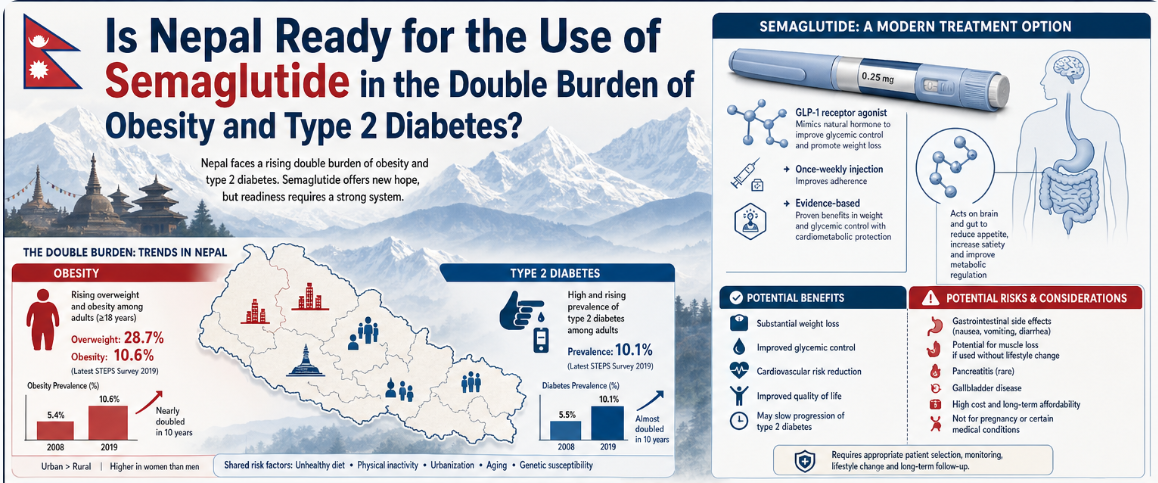
A significant rise in metabolic disorders, mostly obesity and type 2 diabetes mellitus (T2DM) are being witnessed lately in Nepal. A total of 24.3% of the population aged 15–69 years were overweight or obese and 5.8% had high fasting blood glucose levels shown in the 2019 WHO STEPS Survey which signifies an emerging epidemic of non-communicable diseases (NCD) [1,2]. Given the increasing trend of obesity and type 2 diabetes mellitus, the use of semaglutide, a glucagon-like peptide-1 receptor agonist, demands serious scrutiny for the patient profile it is indicated for.
Semaglutide once a week has demonstrated to be superior to all other treatments in weight reduction and glycemic control in numerous randomized controlled trials. For instance, the STEP 1 and STEP 2 trials supported that obese patients with or without T2DM on 2.4 mg semaglutide once weekly showed clinically significant weight reduction and improved glycemic measures with outcomes associated with better quality of life and reduced cardiometabolic risk [3,4].
Nepali population, like other South Asian populations, are prone to central obesity and insulin resistance at considerably lower body mass index (BMI) levels than that of Western population [5], leading to the need for effective management using medications like semaglutide to address both obesity and hyperglycemia, unlike traditional oral hypoglycemics or insulin.
However, there are various challenges with semaglutide’s practical application in Nepal. Firstly, the price of GLP-1 analogs renders them unavailable to the majority of patients in low- and middle-income countries (LMICs). Secondly, it lacks availability, and prescribers are yet to familiarize themselves with it, delaying its incorporation into clinical practice. Thirdly, Nepal’s poor pharmaceutical supply chain poses logistics challenges to consistent access and delivery. In a country with a health system still grappling with both undernutrition and emerging lifestyle-related conditions, these shortcomings reflect the challenge of introducing high-cost pharmacotherapies like that of semaglutide [6]. To combat these issues, it will require multiple angles of action: national-level policy discussions on cost-effectiveness, sensitization to clinicians about semaglutide’s indication and safety profile.
In conclusion, the rising prevalence of obesity and T2DM in Nepal highlights the need for therapeutic advancement. In such a scenario, semaglutide represents a potential dual-benefit therapy that has potential to significantly improve patient outcomes. Therefore, policymakers, scientists, and clinicians must co-ordinate to make semaglutide accessible and well-integrated into national guidelines, overcoming infrastructural and financial barriers and making treatment for metabolic disorders no longer a luxury, but the standard in Nepal.
References:
1. World Health Organization. Nepal STEPS Survey 2019: Fact Sheet. Geneva: WHO; 2019.
2.Ministry of Health and Population (MoHP). Non-Communicable Disease Risk Factors: STEPS Survey Nepal 2019. Kathmandu: MoHP, 2020.
3.Wilding JPH, Batterham RL, Calanna S, et al. Once-Weekly Semaglutide in Adults with Overweight or Obesity. N Engl J Med. 2021;384(11):989-1002.
4.Davies MJ, Bergenstal R, Bode B, et al. Efficacy of Once-Weekly Semaglutide vs Placebo as Add-on to Basal Insulin in Type 2 Diabetes (SUSTAIN 9). Lancet Diabetes Endocrinol. 2021;9(7):509–517.
5.Misra A, Shrivastava U. Obesity and Dyslipidemia in South Asians. Nutrients. 2013;5(7):2708–2733.
6.Nepali Times. Undernourished to Overweight: A Public Health Crisis. Published March 25, 2024. Accessed July 31, 2025. https://nepalitimes.com/news/undernourished-to-overweight
Authors:
Department of Medicine and Surgery, Madhyapur Hospital, Nepal
Japana Regmi, MBBS¹, Sushil Raj K.C, MD²
²Department of Internal Medicine, Madhyapur Hospital, Nepal
Corresponding author: Japana Regmi (japanaregmi01@gmail.com)