
Written by Ram Prakash, Clinical Embryologist
One of the least appreciated truths in male fertility work, here in Noida as much as anywhere else in the field, is just how directly the plain biology of sperm production governs every clinical decision that gets made once a semen analysis comes back.
Once a man understands roughly how much sperm his body turns out in a day, how long each cell takes to come to maturity, and what can quietly knock the whole process off course, a great deal that had seemed arbitrary about his treatment timeline begins to make sense, and so does the harder question of what a realistic improvement actually looks like.
How Many Sperm Does the Male Body Actually Produce Each Day?
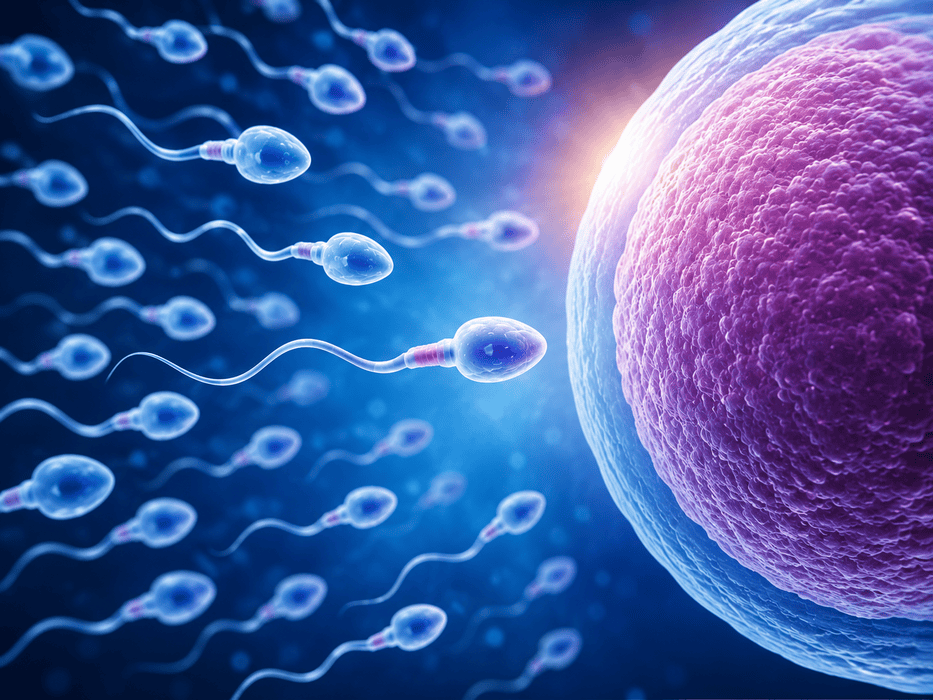
The numbers here are genuinely striking. A healthy adult man makes something in the order of fifteen hundred sperm every second, which works out at somewhere between a hundred and three hundred million across both testes over the course of a single day.
Unlike a woman’s fertility, which runs on a monthly rhythm and releases a single egg drawn from a supply that was fixed before she was even born, this is a continuous business that simply carries on from puberty onward. It is, in effect, a factory that never closes for the night.
It slows a little with age and can certainly be knocked about by ill health, but it does not run dry, and because several generations of sperm are always in production at once, mature sperm are on hand at any given moment regardless of how recently a man has ejaculated.
How Long Does It Take a Single Sperm to Develop?
Here is the number that matters more than any other, and the one most often underestimated by patients and, if I am honest, sometimes poorly explained by clinicians too: a single sperm cell takes somewhere between sixty-four and seventy-four days to make the whole journey to maturity.
What Are the Stages of Spermatogenesis?
That journey unfolds in three fairly distinct phases, spread across the testes and the epididymis:
- Proliferation (roughly days 1–16): the stem cells known as spermatogonia, sitting inside the fine seminiferous tubules, divide over and over to lay down the raw material for everything that follows
- Meiosis (roughly days 16–46): the spermatocytes go through two rounds of division that halve their chromosomes and leave behind the haploid spermatids that are the true precursors of mature sperm
- Spermiogenesis and epididymal maturation (roughly days 46–74): those spermatids are gradually remodelled into the familiar tadpole shape and then pass through the epididymis over some twelve concluding days, picking up along the way both the ability to swim and the surface proteins they will need to fertilise an egg
What Factors Can Disrupt Daily Sperm Output and Quality?
Both the sheer quantity and the quality of sperm — the latter judged by how well they swim, what shape they are, and how intact their DNA remains — turn out to be surprisingly sensitive to a whole range of influences, some of them within a man’s control and some not:
| Factor | Effect on Sperm Production or Quality |
| Heat (tight clothing, hot baths, prolonged sitting) | The testes need to sit a couple of degrees below core body temperature to do their work, and heat quietly conspires against that |
| Sustained stress, emotional or physical | Disturbs the hormonal signalling of the HPG axis that governs testosterone and FSH |
| Nutritional gaps (zinc, folate, selenium, vitamins C and E) | Tends to lower output while raising the oxidative DNA damage in whatever does get made |
| Anabolic steroids or testosterone replacement | Switches off the body’s own sperm production and can drive it all the way to complete azoospermia |
| Chemotherapy and radiation | Can inflict lasting harm on the spermatogonia, depending on the dose and the site being treated |
| Varicocele | Quietly raises the temperature inside the scrotum, dragging down both the output and the quality of what is produced |
| Age | A slow decline in daily output, in motility, and in DNA integrity from the mid-thirties onward |
Why Does the 64-to-74-Day Window Matter for Male Infertility Treatment?
This is the point at which all the biology turns into something genuinely practical, and there are a handful of consequences flowing from that maturation timeline which every man about to begin fertility treatment in Noida really ought to grasp before his first evaluation:
- A semen analysis is a snapshot of the sperm made sixty-four to seventy-four days ago, rather than a report on what the body is up to this week
- A single poor result should never be taken as the final word — the right response is a repeat test timed at least seventy-four days after the first, not an immediate leap to IVF
- Any attempt at improvement — cutting down heat exposure, closing a nutritional gap, stopping anabolic steroids — takes that identical two-to-three-month stretch before the benefit can show up in a follow-up analysis
- The same holds for medical or surgical treatment, such as hormonal therapy or a varicocele repair, which need the very same waiting period before anyone can honestly judge whether they have worked
Conclusion
At Embryologist.co.in we regularly meet men who were told, on the strength of one result, that their semen analysis was simply how things were, when a properly timed repeat, sometimes after nothing more elaborate than a few lifestyle changes, has told a rather different story. The sixty-four-to-seventy-four-day rule is really no grounds for pessimism at all. It is far better understood as an argument for patience and for structured follow-up in place of premature conclusions.
Understanding how sperm are actually made is one of the more useful things any man can do before starting male infertility treatment in Noida, because it explains where the timelines come from, sets expectations at a sensible level, and, far more often than patients tend to assume at the outset, points toward options that do not have to begin with IVF.