
I remember my first proper long session at an audio recording studio. I was confident as I walked into the room, warmed up for maybe two minutes, and started recording. But after three hours, my voice sounded like I had swallowed gravel. The recording engineer was patient with me. But my voice was not.
That day taught me more about vocal health than any tutorial ever could. So if you are a singer, voice actor, or podcaster who spends serious time in the booth, this one is for you.
Start Before You Walk In
Most people think that vocal care begins when the mic goes live. But that is not true. What you do the day before matters just as much.
Make sure that you get a full night of sleep. Remember that a tired body produces a tired voice, and no amount of technique fixes that. In the 24 to 48 hours before your session, avoid talking too much, shouting, and anything that pushes your voice unnecessarily.
Also, skip alcohol and coffee, too. Both dehydrate your vocal cords and can cause excess mucus that makes a clean recording nearly impossible.
I also stay away from dairy products the day before a session. Diary products coat the throat and create that annoying need to clear it constantly. This is not something you want happening between takes.
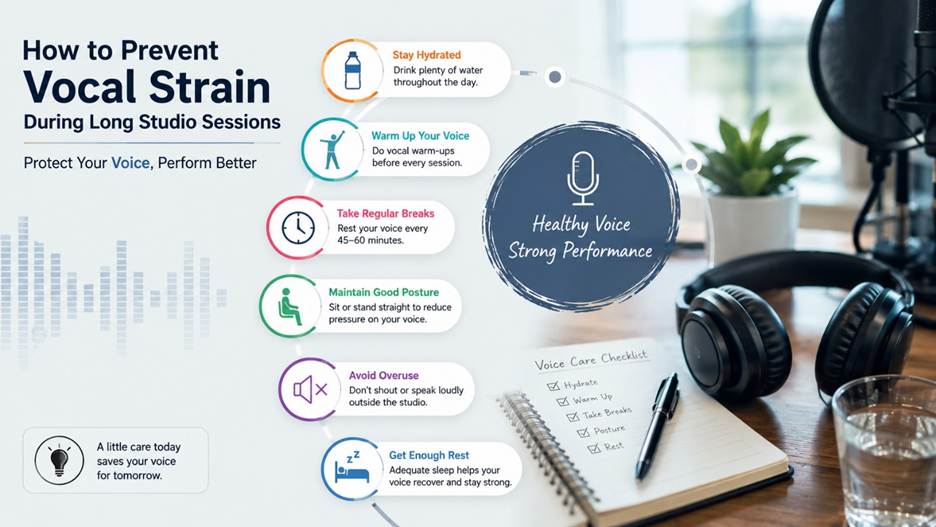
And how can I forget about staying hydrated? This is the single most underrated habit in this space. I start drinking water at least three hours before I record. Additionally, your vocal cords need moisture to stay flexible and resilient. Here’s my tip: Room temperature water works best because cold water can tighten the muscles around your throat.
Warm Up Like You Mean It
Your vocal cords are muscle tissue. You would never sprint without stretching. So do not jump straight into a full performance either.
It is best to spend at least 10 to 15 minutes warming up before the session begins. Also, start with gentle humming, then move into lip trills and easy scales. Work your way up gradually because your goal is to increase blood flow to the area and loosen up the flexibility of your range before you demand anything from it.
At a vocal studio in karachi where the air conditioning can be quite aggressive, I always do a slightly longer warm-up because cold and dry air stiffens the throat faster. So give yourself extra time if you are also recording in a similar space.
Structure Your Session Smartly
One of the biggest mistakes I see singers make is trying to power through a five or six-hour session without proper breaks. Your voice is not built for that.
Moreover, try to limit continuous singing to 45 minutes at a time, then take a real break. A quiet rest where you drink water and let your throat recover. Even 10 minutes of actual vocal rest makes a noticeable difference.
And do not try to finish everything in one sitting if you are working on multiple songs. Additionally, professional engineers at any audio recording studio will tell you that split sessions produce better results. You get cleaner takes, fewer edits, and a voice that sounds consistent from the first song to the last.
Also, be honest with yourself about which part of the day your voice feels best. Some people peak in the morning, others in the late afternoon. So book your studio time to match your natural rhythm wherever possible.
Techniques to Save Your Voice
A lot of vocal strain comes from bad habits, not a lack of talent. Tension in the jaw, shoulders and neck forces your cords to overwork. So check your posture regularly during sessions. Also, stand tall, relax your shoulders, and breathe from your diaphragm rather than your chest.
If a note feels like a fight, do not force it. Also, transporting a song down a key or adjusting the melody to suit your natural range is not giving up. So never force your voice into a range that is not comfortable for you because it might cause injuries.
A Few Small Things That Add Up
Keep a steam inhaler or a humidifier nearby if you record often. Keep in mind that dry air is hard on the vocal cords, and it is a common issue in studio environments.
Moreover, avoid whispering when your voice is tired. It actually puts more strain on the cords than speaking softly in your normal voice does.
Honey and ginger in warm water is something I swear by between sessions. It soothes irritation without numbing anything the way some throat sprays do.
Final Words
Your voice is the instrument. So treat it with the same care a guitarist gives their hands or a pianist gives their fingers.
Long sessions are part of the job, but vocal strain does not have to be. With the right preparation, smart scheduling and good technique, you can record for hours and walk out of the studio feeling fine.
Hence, take care of your voice today, and it will show up for you tomorrow.
Very good post. I definitely appreciate this site. Stick with it!