
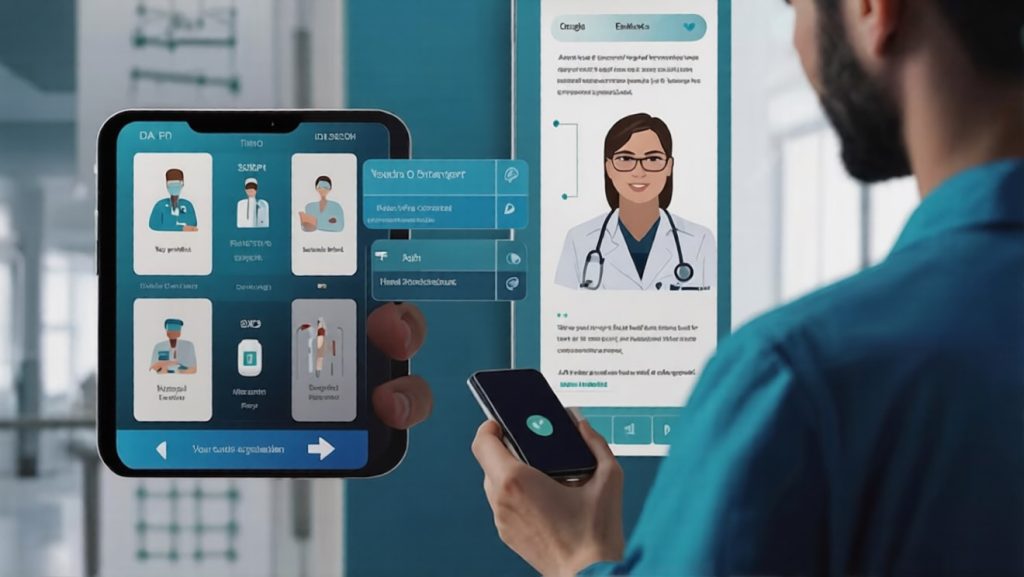



The healthcare sector is in an immense digital transformation, with mobile technology at the core of the transformation. The mobile apps are changing the care delivery and care experience, and booking a doctor appointment, real-time monitoring of chronic conditions are only a few examples of how this is achieved.
An environment dynamic in the areas of accessibility, efficiency, and patient outcomes, healthcare mobile app development is also a strategic option for start-ups, hospitals, and businesses in this environment.
This is however not true in the year 2026, with healthcare applications no longer being a luxury to the current healthcare system but an essential aspect of the system. The demands of healthcare apps have been raised significantly due to the enhancement of artificial intelligence, wearables, and telemedicine. Below is a guide that will take you through all you should know to develop a successful healthcare app in the current competitive world.
Types of Healthcare Apps
Healthcare apps are available in many types and are developed to meet a designated need of the ecosystem. It is essential to understand these types and begin development.
Telemedicine Apps
These apps allow patients to communicate with the doctor either via a video chat, chat, or voice call remotely. They have particularly become popular in times of international health crises and have been increasing since then.
Fitness and Wellness Apps
The apps will focus on preventive care and tracking physical activity, diet, sleeping, and mental health.
Electronic Health Record (EHR) Apps
EHRs can provide patients and other health practitioners with medical records in a secure and effective manner.
Medication Management Apps
Such apps remind a user about the time of taking medicine and enable one to keep the track of the prescription.
Doctor-On-Demand Apps
Portals of on-the-spot consultation of the patient-doctor when it comes to an emergency.
Key Features of a Successful Healthcare App
To be different in a highly competitive market, your healthcare application needs to contain certain essential features that would make it easier to operate with and gain trust.
- User-Friendly Interface – It is easy to use since it has easy navigation.
- Appointment Scheduling – Schedule appointments easily and be reminded of appointments to reduce missed appointments.
- Secure Messaging – Facilitates the provision of confidential communication between the providers and the patients.
- Real-Time Notifications – Notifies users of their health alerts and appointments.
- Data Security – High level of encryption and authentication is essential.
- Integration with Wearables – Unlocks health data.
Latest Trends in Healthcare App Development (2026)
The medical technology industry continues to evolve rapidly. The most significant trends that will affect the future in 2026 include the following:
Artificial Intelligence and Predictive Analytics
AI supports data analysis of patients, prognosis of the disease, and assists physicians with diagnosis.
Remote Patient Monitoring (RPM)
Vital signs monitoring can be constantly done through apps, which minimize hospital visits.
Voice Technology
In healthcare apps, voice assistants are being increasingly adopted as an interaction tool in a hands-free manner.
Blockchain for Data Security
The blockchain will offer a transparent yet safe procedure of data sharing among the stakeholders.
Augmented Reality (AR) & Virtual Reality (VR)
Practical training, care, and education of the patients.
Benefits of Healthcare Mobile Apps
Patients and providers find the use of healthcare apps useful.
For Patients:
- Availability of more healthcare services
- Reduced waiting times
- Improved health monitoring/knowledge
For Providers:
- Better interactions with patients
- Streamlined operations
- Enhanced data management
Step-by-Step Process to Develop a Healthcare App
There is a systematic way of developing a healthcare app.
1. Market Research
Know your target market, competition and market requirements.
2. Define Features and Goals
Describe the major features and goals of your application.
3. Choose the Right Platform
Choose to develop based on iOS, Android or both.
4. Design UI/UX
Create easy-to-use and user friendly healthcare specific designs.
5. Development Phase
Begin coding with the help of the right technologies and structures.
6. Testing and QA
Check the application to be bug-free and secure.
7. Deployment
Publish the application on the application stores and keep track of the performance.
Choosing the Right Technology Stack
The choice of the technology stack is very important in regard to performance and scalability.
- Frontend: React Native, Flutter
- Backend: Node.js, Django
- Database: PostgreSQL, MongoDB
- Cloud Services: AWS, Google Cloud
You will base it on the complexity of the application, the budget and scalability requirements of your application.
UI/UX Design Best Practices
Our healthcare apps are supposed to be access and usability oriented.
- Have easy-to-read fonts and type
- Maintain simple navigation
- Ease of use of emergency features
- Make things accessible to the aged
The interface should be designed in a way that can greatly enhance user interest and satisfaction.
Data Security and Compliance
In healthcare apps, security is a no-go area. Such rules as HIPAA and GDPR have to be followed by the developers.
The major security measures involve:
- End-to-end encryption
- Multi-factor authentication
- Secure APIs
- Regular security audits
Lack of adherence may attract legal prosecution and loss of users.
Cost of Healthcare App Development in 2026
The cost of development of a healthcare application depends on the features, complexity, and location.
- Basic App: $20,000 – $50,000
- Mid-Level App: $50,000 – $120,000
- Advanced App: $120,000+
In case you work with a dedicated team of Houston app development or other experts in the area, the cost might be different depending on the knowledge and the quality of the service, yet the investment might guarantee improved scalability and compliance.
Challenges in Healthcare App Development
There are many challenges that developers can encounter:
- Regulatory Compliance
- Data Privacy Concerns
- Legacy Systems Interaction
- User Adoption Issues
These issues can be resolved at the initial stage to save time and resources.
AI and Machine Learning in Healthcare Apps
The AI in healthcare apps is transforming the process of making decisions as it can be smarter and faster.
- Predicting and early diagnosis of disease
- Individualized treatment regimes
- Chatbots for patient support
The efficiency of apps is improved with time of use because machine learning models are constantly being improved with the processing of more data.
Integration with Wearables and IoT Devices
Wearables are important in contemporary healthcare apps.
Smart devices (smartwatches and fitness trackers) can provide real-time health data, which comprises:
- Heart rate
- Sleep patterns
- Physical activity
This information is useful in assisting the doctors to make wise choices and in enabling the users to be proactive when it comes to their health.
Testing and Quality Assurance
Healthcare apps are supposed to be rigorously tested to make them reliable.
- Functional Testing
- Security Testing
- Performance Testing
- Usability Testing
Proper QA is needed to make sure that the app will work well in other conditions and will not lose the trust of the users.
Launching and Marketing Your Healthcare App
It must be a successful launch with a decent marketing plan.
- App Store Optimization (ASO)
- Social media campaigns
- Influencer partnerships
- Content marketing
After the launch, get feedback and keep on improving the app.
Future of Healthcare App Development
The future of medical apps is also bright and innovations keep pushing the limit.
- More utilization of AI and automation
- Telehealth service growth
- Increased attention to individual medicine
- Better system interoperability
Healthcare apps will remain important in ensuring that healthcare is more accessible and effective.
Conclusion
In 2026, healthcare development in terms of apps will be more developed and even more necessary than ever. Provided the correct strategy, technology, and compliance measures, the businesses will be able to develop effective solutions that can change the way patients are taken care of and simplify the process of medical services. A carefully designed healthcare application can make either a startup or an established organization the leader in the digital healthcare revolution.
——————————————–





Leave a Reply