
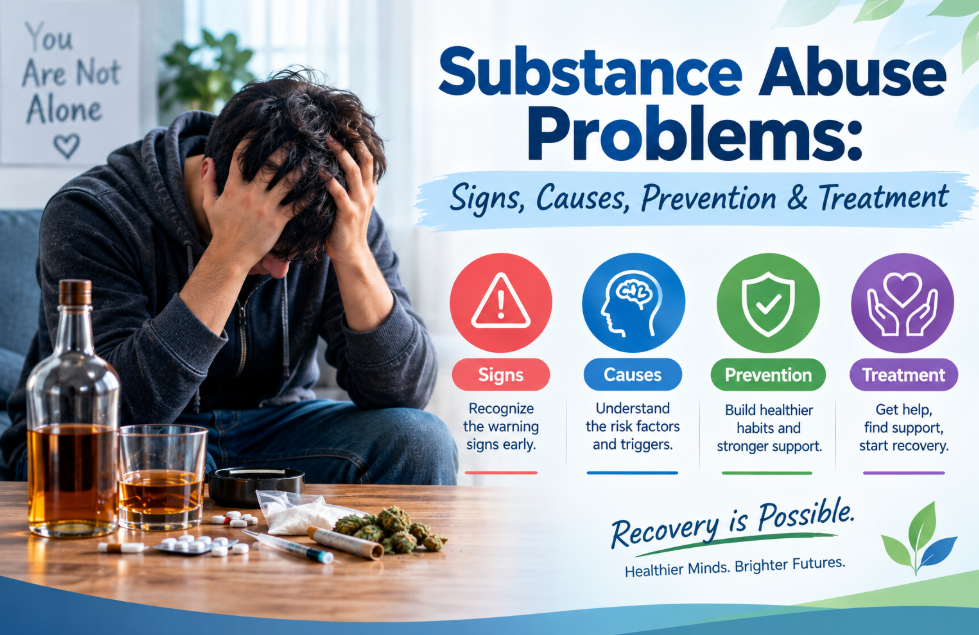
Substance abuse is now a days one of the major public health concern that affects millions of people worldwide. A substance abuse problems is a medical condition which interferes with a person’s relationships with his family and friends. It not only involves the harmful or excessive use of alcohol, prescription medications, or illegal drugs, it will leading to physical, psychological, social, and financial problems in the person as well as society.
Similarly, it interferes with the person’s ability to fulfill his work school or family obligations and also It ends up in legal problems and also behavior which are considered dangerous . If it is being left untreated, substance abuse can develop into Substance Use Disorder (SUD), which is regared as chronic medical condition that requires professional care and expert treatment.
The good news on this SUD is that recovery is possible when it is diagonsed and treated in early state. With early diagnosis, proper treatment, counseling, and support from family and healthcare professionals, many people had successfully overcome substance abuse and regain the healthy, productive lives.
What Is Substance Abuse?
Substance abuse refers to the repeated use of psychoactive substances in the ways that will negatively affect a person’s health, relationships, work, or daily life. These negative substances may include alcohol, nicotine, prescription medications, and illegal drugs that are found around.
People with substance abuse problems often continue using these substances despite experiencing serious health or social consequences. Substance abuse problems can also include using or taking a Substance in increasing amounts. Going to great lengths to acquire the Substance, withdrawal Substance when the Substance is not used or being able to stop or reduce the use of substance.
Marijuana, synthetic marijuana, depressants (e.g., alcohol, barbiturates, benzodiazepines), stimulants (e.g., amphetamines, cocaine, MDMA, or ecstasy), hallucinogens (e.g., LSD), opioids (e.g., codeine, heroin, and morphine), and over-the-counter medications are the most commonly abused substances. Anabolic steroids are sometimes abused in order to improve athletic performance.
The main causes of substance abuse disorder include the following
Although the real causes of substance abuse disorder is not clear, there are various factors which are considered to have a significant role.
Factors for Substance Abuse
These are the most common factor for this abuse problems
- Hereditary appears to the involved and the risk is multiple fold if the people who have family members with these kinds of problems.
- Besides hereditary, a person’s environment like school, work, friends , family. cultural and religious beliefs can also affect.
- Even recreational use can lead to long term usages and frequent usages of the substance,
- Besides, the above mentioned factors people with depression or anxiety can play a role in the Substance abuse problems.
- The following can show that there are substance abuse problems.
- Being unable to stop using the substance or taper out the amount little by little
- Experiencing anger or defense whenever a third person mentions regarding the substance use.
- Feeling of guilt about substance use
- Not being able to handle obligations at work, school or at home and carrying out daily activities.
- Using the substance the first thing in the morning after waking up.
Commonly Abused Substances
These are the some of the most frequently abused substances . Here is the some of the list of World Health Organization (WHO) – Psychoactive Drugs . that are regarded as abused drugs
- Alcohol Abuse
- Tobacco and nicotine products
- Cannabis (Marijuana)
- Cocaine Abuse
- Heroin Abuse
- Methamphetamine
- Prescription opioids
- Sleeping pills and sedatives
- Anti-anxiety medications
- Inhalants
Each of the above mentioned substance affects the brain differently but can lead to dependence and addiction with repeated misuse.
Substance Use Disorder(SUD)
Substance abuse disorder or drug addiction is a disease which impacts a person’s brain and behavior which lead to the inability to control the use of a legal or illegal drug or a certain medication. The substances like alcohol, marijuana and also nicotine are regarded as drugs. Whenever a person is addicted to that substance he or she will keep on using it despite the harm it can cause.
Signs and Symptoms of Substance Abuse
Common warning signs for the abuse of the negative substance can be found out. You can supect for it if it include following most common signs of substance abuse is found:
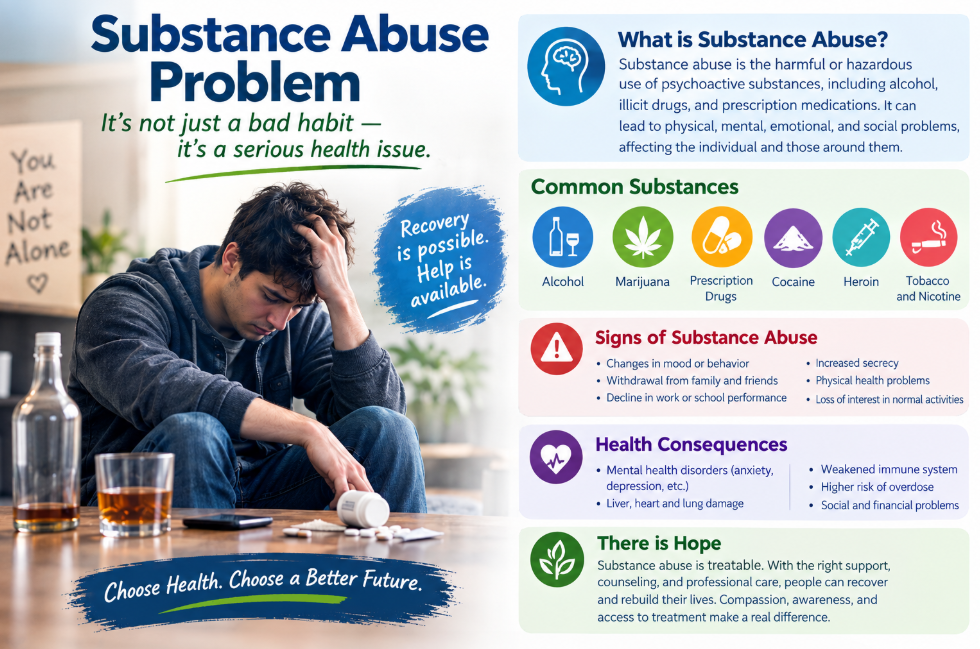
Some other signs and symptoms of substance abuse disorder can include
- The need to use the drug on a regular basis. Even daily or several times a day.
- Blockage of other thoughts because of the intense cravings for those drugs
- Building a tolerance, it means using greater amounts of the substance to get the same level of effects.
- Making retains to maintain a supply of the substance that is being abused.
- Spending money even though it is out of the users budget
- Stealing money, which is not done normally to get that next fix
- Driving or doing the r types of risky activities under the influence of that substance.
- Failing to stop the use of that particular substance or drug
- Withdrawal symptoms when trying to stop using that substance.
Signs and symptoms of Recent Use
include:
- A sense of euphoria or feeling “high”
- A heightened sense of visual, auditory and taste perception
- Increased blood pressure and heart rate
- Red eyes
- Dry mouth
- Decreased coordination
- Difficulty concentrating or remembering
- Slowed reaction time
- Anxiety or paranoid thinking
- Cannabis odor on clothes or yellow fingertips
- Exaggerated cravings for certain foods at unusual times
Long-term (chronic) use
Chronic sign of substance abuse is often associated with:
- Decreased mental sharpness
- Poor performance at school or at work
- Reduced number of friends and interests
- Hallucinations
- Paranoia
- Dilated pupils
- Chills and sweating
- Involuntary shaking (tremors)
- Behavior changes
- Muscle cramping and teeth clenching
- Muscle relaxation, poor coordination or problems moving
- Reduced inhibitions
- Heightened or altered sense of sight, sound and taste
- Poor judgment
- Memory problems or loss of memory
- Reduced consciousness
- Increased or decreased heart rate and blood pressure
- Frequent mood swings
- Irritability or aggression
- Secretive behavior
- Poor personal hygiene
- Financial problems
- Risk-taking behaviors
- Withdrawal from family and friends
- Increased tolerance to substances
- Loss of interest in hobbies
- Poor work or school performance
- Missing responsibilities
- Sleep disturbances
- Changes in appetite
- Bloodshot eyes
Recognizing these symptoms early allows for quicker intervention and better recovery outcomes. If the following systems are seen then one must make an appointment with a doctor and take necessary professional help.
When the user can’t stop using a Drug ?
- You continue using the drug despite the harm it causes
- Your drug use has led to unsafe behavior, such as sharing needles or unprotected sex
- You think you may be having withdrawal symptoms after stopping drug use
Health Effects of Substance Abuse
There are lots of health effect due the substance about. Not only physical and mental effect it also social Effects of drug abuse on society which some are as listed as physical, mental and social as follows
Physical Effects
Physical Effect on the health incluse :
- Liver disease
- Heart disease
- Lung damage
- Poor nutrition and eating habits
- Increased risk of infections
- Accidental psychotic injuries
- Inscrease in blood pressure
- Stroke and MI
- Weakened immune system
- Weight changes
Mental Health Effects
Substance abuse can contribute to follwing mental health commonly:
- Depression and Anxiety
- Difficulty concentrating
- Hallucinations
- Suicidal thoughts and attempts
- Panic attacks on minor things
- Memory problems
- Personality changes
- Agresssion and silence
Social Effects
Addiction often affects itself as well as surrounding society, including:
- Conflict in Family
- Relationship breakdown
- Job loss and quit
- Academic failure and decline in progress
- Financial hardship
- Legal problems
- Social isolation
When Should You Seek Help?
you need to see for the professional assistance if you or someone have following things:
- Loss of control over substance use
- Continious Withdrawal symptoms
- Repeated unsuccessful attempts to quit
- Health problems is seen
- Relationship or work difficulties
- Thoughts of self-harm or suicide attempts
When to Seek Emergency Help ?
If the following symptoms are seen then the user must seek emergency help
- Overdosing on that substance usually hard drugs
- consciousness changes
- Difficulty in breathing
- Experiencing seizures or convulsions
- Has signs and symptoms of a possible heart attack, such as chest pain or pressure
- Has any other troublesome physical or psychological reaction to use of the drug
Complications
Without treatment, substance abuse may lead to many complcation. there can be lots of phyical complication to social complication as:
- Drug overdose
- Permanent brain damage
- Mental illness
- Violence
- Suicide
- Death
- Organ failure
- Infectious diseases
How Is Substance Abuse Diagnosed?
Healthcare professionals can diagnose substance by multiple ways. The common method for diagonosining it are:
- Medical history
- Physical examination
- Mental health assessment
- Laboratory testing when its needed
- Standardized screening questionnaires
Early diagnosis improves treatment outcomes and prevent future complication
Treatment Options
Recovery is possible when it is being diagonse and start the treatment as soon as it is known. It usually involves a combination of treatments as per the individual’s needs.
Medical detoxification, social and behaviroal therapy, medicantions and social support can recover well .
1. Medical Detoxification
Medical teatment under the supervision helps manage withdrawal symptoms safely and fast
2. Behavioral Therapy
Effective behaviours therapies should be done. not only the medicine , familes, society members plays imporortan role some the common therapy include:
- Cognitive Behavioral Therapy (CBT)
- Motivational Interviewing
- Group games
- Outgoing and engaments
- Family Therapy
- Group Therapy
3. Medications
Certain medications may will help to reduce the abused substane cravings or support recovery for opioid, alcohol, or tobacco dependence.
4. Rehabilitation Programs
Rehabilitation programs at the Rehab Centers may include:
- Inpatient rehabilitation
- Outpatient treatment
- Day-care rehabilitation
- Community recovery programs
- Physiotherapy Exercise and programs
5. Support Groups
Peer support groups provide encouragement and help maintain long-term recovery.
You can seek for the Evidence-Based Treatment for Substance Use Disorder
Final Thoughts
Substance abuse disorder or substance abuse problems are a common thing nowadays with many people especially with teens.The substance such as marijuana, alcohol or even harder drugs like cocaine or heroin is abused by the users to a large extent.
These kinds of substances usually lead to long term health problems and even death. As these substances are addictive in nature, putting them on can be extremely difficult. People needed a daily ignorer to feel just “normal”. These substances pose a harm on that individual’s health and can interfere with his social, work or family life.
The user can experience various symptoms when using the drugs. Some even overdose and die at that exact moment.So we must recognize the symptoms of these disorders and take necessary precautions and professional help
So finally, substance abuse disorder can impact a person’s life in a negative way and the friend, family or other close people should help the victims of the drug abuse. Recovery from a drug abuse is possible under the guidance of the team of doctors, psychiatrist, psychologist and the loved ones.
There are a lot of rehabilitation centers and they provide help to the victim and help him recover and live a normal life without the use of the substance which can damage the person’s health negatively.
References
- World Health Organization (WHO). Drugs (Psychoactive)
- Substance Abuse and Mental Health Services Administration (SAMHSA). Substance Use Resources
- Substance Abuse and Mental Health Services Administration (SAMHSA). What Is Substance Use Disorder?
- Substance Abuse and Mental Health Services Administration (SAMHSA). Substance Use Disorder Treatment
- National Institute on Drug Abuse (NIDA). Drug Use and Addiction Research Topics